How to Write a Professional Student Biography Using These Templates and Examples
Whether you are applying for a scholarship, updating your LinkedIn profile, or submitting a research paper, a highly effective student biography must include these five foundational elements:
- Current Academic Status: Your full name, university/school, major, and expected graduation year.
- Academic Milestones: Relevant coursework, research projects, or academic honors.
- Professional Goals: A clear statement of the industry or role you are working toward.
- Transferable Skills: Soft or hard skills developed through clubs, sports, or classes (crucial if you lack formal work experience).
- The "Humanizer": A brief mention of a hobby, volunteer interest, or personal background detail to make you memorable.
Writing a biography as a student can feel intimidating. Unlike seasoned professionals who have decades of career milestones to draw from, students often stare at a blank page wondering how to summarize an academic career that is still actively unfolding. However, a well-crafted student biography ranks among the top tools you can use to secure internships, win scholarships, and build a professional network.
This comprehensive resource provides structured templates, strategic advice for students with zero work experience, and formatting guidelines for various platforms. By understanding the mechanics of a strong narrative, you can transform a simple list of classes into a compelling professional identity.
What Should You Include in a Student Biography?
A student biography is not a resume written in paragraph form. While a resume provides a bulleted historical record of what you have done, a biography provides a narrative summary of who you are and where you are going. According to guidelines provided by Arizona State University, a standard student bio must establish your academic identity immediately.
The "Value Add" Concept
One of the most common mistakes students make is focusing entirely on past tasks rather than future potential. The George M. Pullman Educational Foundation advises students to focus heavily on the "Value Add." This means you should not just list the facts of your education; you must show how your specific background will contribute to a future team, campus community, or corporate environment.
For example, instead of simply stating, "I am the treasurer of the Debate Club," frame it as a value add: "As treasurer of the Debate Club, I manage a $5,000 annual budget, developing practical skills in financial forecasting and resource allocation."
The Hook
Your opening sentence (the hook) must do the heavy lifting. It should immediately communicate your name, your current academic standing, and your primary area of focus. Avoid starting with "Hi, my name is..." in formal biographies. Instead, use a strong third-person declarative statement.
Strong Hook: "John Doe is a junior at State University majoring in Computer Science, with a specialized focus on ethical cybersecurity practices and network architecture."
Choose the Right Student Biography Template for Your Specific Needs
Not all biographies serve the same purpose. A 300-word narrative bio that works perfectly for a personal portfolio website will be rejected by an academic journal that requires a strict 75-word limit. Before you begin writing, you must identify your audience and platform.
The Bio Selection Matrix
Use the following comparison table to determine which template format aligns with your current objective.
| Bio Type | Typical Length | Perspective | Best Used For |
|---|---|---|---|
| The Elevator Pitch | 1–2 sentences | 1st or 3rd Person | Email signatures, networking event introductions, Twitter/X bios. |
| The Micro-Bio | 50–75 words | 3rd Person | Conference programs, academic journal submissions, guest blog posts. |
| The Standard Bio | 100–150 words | 1st or 3rd Person | LinkedIn "About" sections, scholarship applications, department directories. |
| The Narrative Bio | 250–300 words | 1st Person | Personal portfolio websites, long-form interview introductions, graduate school personal statements. |
First Person vs. Third Person
The perspective you choose drastically alters the tone of your biography. As a general rule, formal academic applications, scholarship submissions, and university directories require the third person (he/she/they). This creates a sense of objective professionalism.
Conversely, digital networking platforms like LinkedIn and personal websites favor the first person (I/me/my). Writing in the first person on social platforms feels more conversational, approachable, and authentic to modern recruiters.
How to Write a Student Bio When You Have No Work Experience
A major pain point for high school students and college freshmen is the dreaded "experience gap." When you have never held a formal job or internship, writing a professional biography can feel impossible. However, a highly effective strategy is to pivot away from employment history and focus entirely on Transferable Skills and Academic Milestones.
The "Transferable Skills" Strategy
If you lack professional experience, you must mine your academic and extracurricular life for skills that employers and scholarship committees care about. Did you lead a group project that required coordinating schedules? That is project management. Did you write a 20-page research paper? That demonstrates data synthesis and written communication.
When writing your bio, frame high GPAs, specific rigorous coursework, or difficult capstone projects as your "experience." Extracurricular leadership roles—even informal ones—can be used to demonstrate soft skills like conflict resolution, budget management, or event organization.
Template: The "Skills-First" Student Bio
Use this template if you are a first-year student or high schooler with no formal work history. It focuses on academic rigor and future potential.
No Experience TemplateSarah Jenkins is a highly motivated sophomore at State University, pursuing a degree in Environmental Science. With a strong academic foundation in biology and climate modeling, Sarah has developed a passion for sustainable urban planning. During her time at State University, Sarah has cultivated strong skills in statistical analysis through rigorous coursework and participation in the Campus Sustainability Committee. Recently, she spearheaded a research project focused on local water conservation methods, which reinforced her desire to pursue a career in environmental policy. Outside of the classroom, Sarah enjoys hiking and volunteering at the local animal shelter. She is currently seeking internship opportunities to apply her academic knowledge to real-world challenges in the renewable energy sector.
Professional Templates for College and Graduate Students
As you progress into your junior and senior years, or transition into graduate school, your biography must evolve. It should shift from focusing on broad potential to highlighting specific research niches, specialized skills, and concrete career aspirations.
The 3-Paragraph Narrative Template
This long-form template is ideal for personal websites or detailed portfolio introductions. It follows a strategic three-part structure:
- Paragraph 1: The Professional Anchor. State your current role, major, and immediate hard skills.
- Paragraph 2: The Academic Deep-Dive. Detail specific research, relevant coursework, internships, and awards.
- Paragraph 3: The Humanizer. Share hobbies, volunteer work, and unique interests that make you relatable.
The Short "Biographical Statement" (75 Words)
Academic journals and conference programs often enforce strict word limits. The UChicago Crown School notes that professional biographical statements for publications should typically be kept under 75 words, focusing exclusively on academic credentials and current research.
Micro-Bio TemplateThe Graduate and Law School Bio
Graduate students must position themselves as emerging experts rather than just students. According to sample profiles from Yale Law School, graduate bios should heavily emphasize specialized clinics, published papers, and specific advocacy or research goals.
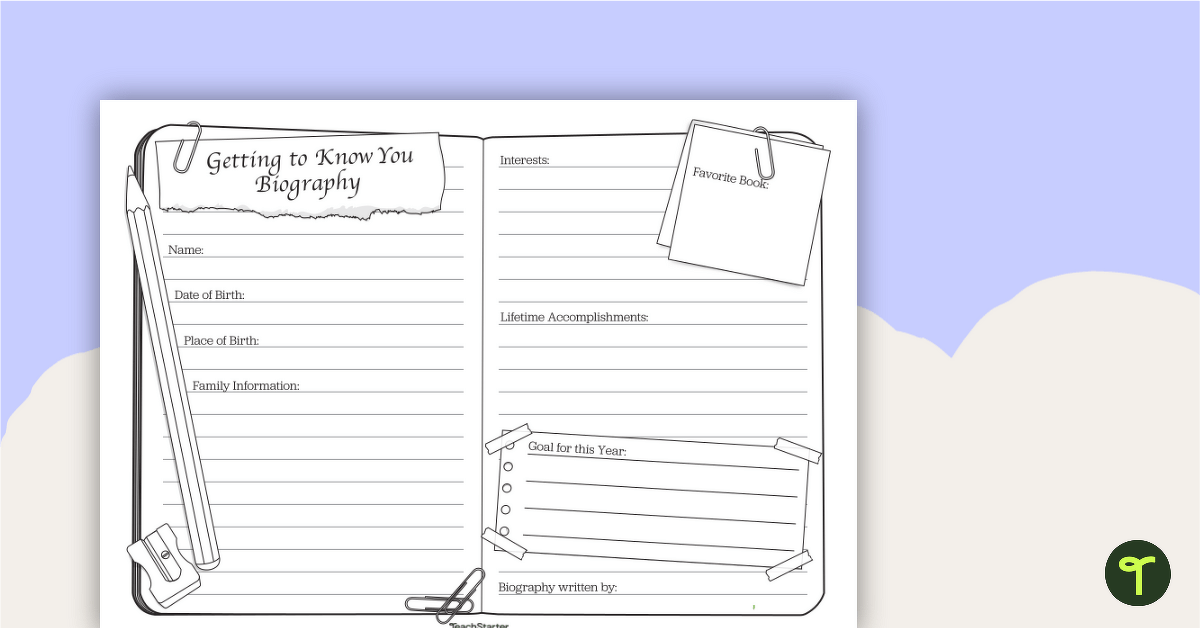
Image source: Teach Starter
Creative Templates for K-12 Students and Teachers
Biography writing is a core component of the K-12 curriculum, but younger students often struggle with the narrative format. Teachers frequently use structured graphic organizers to help elementary and middle school students gather facts before drafting paragraphs.
The "STEAL" Method for Student Biographies
When teaching students how to write about themselves or historical figures, educators often rely on the STEAL acronym to ensure a well-rounded character profile. This method prompts students to look beyond basic facts (like birth dates) and examine deeper traits:
- S - Speech: What does the person say? How do they communicate?
- T - Thoughts: What are their beliefs, goals, or dreams?
- E - Effects on Others: How do they impact their community or classmates?
- A - Actions: What notable things have they done?
- L - Looks: (Less relevant for professional bios, but used in historical character analysis to describe presentation).
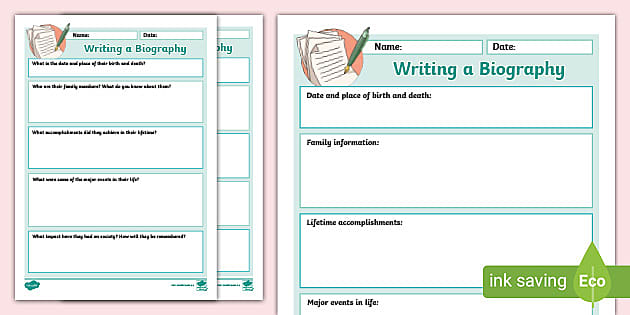
Image source: Twinkl
The "Student of the Month" Poster Template
For elementary classrooms, a visual, fill-in-the-blank approach is highly effective. This template can be printed on a poster or used in a digital presentation.
K-12 Template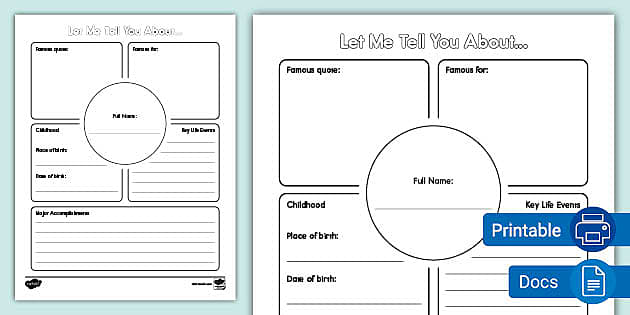
Image source: Twinkl
How to Format Your Bio for Different Platforms
A common mistake students make is writing one biography and copying it identically across every platform. The context of the platform dictates how your bio should be formatted and consumed.
LinkedIn "About" Section
LinkedIn is a social networking platform, meaning your bio should be conversational, keyword-rich, and written in the first person. Recruiters search LinkedIn using specific keywords, so you must ensure your bio includes industry-standard terms related to your major.
- Formatting Tip: Use short paragraphs (2-3 sentences max) and utilize bullet points to list specific technical skills or software proficiencies. End with a clear Call to Action (e.g., "Feel free to connect with me to discuss opportunities in data analytics!").
Scholarship and Grant Applications
Scholarship committees are looking for alignment with their foundation's mission. These bios should be written in the third person and maintain a formal, academic tone.
- Formatting Tip: Focus heavily on "Overcoming Obstacles" and community impact. If the scholarship is funded by an engineering firm, ensure your bio highlights your commitment to advancing engineering practices in underserved communities.
The Two-Line Elevator Pitch
For email signatures, brief networking introductions, or digital portfolio headers, you need a micro-format. The formula is simple: Name + Recent Credential + Future Goal.
Expert Tips for Polishing Your Biography
Once you have drafted your biography using the templates above, it requires refinement. A bio is a living document that must be actively managed throughout your academic career.
The Six-Month Rule
According to the Boise State University Writing Center, a professional biography should be reviewed and updated regularly to prevent the information from going "stale." A highly recommended practice is the Six-Month Rule.
Add any new leadership roles acquired in the fall, update your GPA if it improved, and adjust your career goals based on recent coursework.
Add your summer internship, research assistantship, or summer job. Remove outdated high school information (if you are a rising college sophomore or older).
The "Read Aloud" Test
Because biographies are often read aloud by others (e.g., when you are being introduced at a conference or scholarship dinner), you must test the phonetic flow of the text. Read your bio out loud. If you stumble over a sentence, it is too long. If it sounds overly arrogant, you may need to adjust the tone to strike a better balance between confidence and humility (the "humblebrag" balance).
Use Powerful Action Verbs
Avoid passive language like "was responsible for" or "helped with." Instead, elevate your academic achievements using strong action verbs. Replace weak phrasing with words like:
- Spearheaded (instead of "led")
- Orchestrated (instead of "organized")
- Synthesized (instead of "researched")
- Cultivated (instead of "grew")
- Facilitated (instead of "managed")
Frequently Asked Questions
Final Thoughts
Crafting a professional student biography does not require decades of work experience; it requires a strategic understanding of your academic narrative and future goals. By selecting the right template and focusing on your transferable skills, you can present a compelling professional identity.
- Identify your audience: Choose between first-person for digital networking and third-person for formal academic applications.
- Select the appropriate length: Use the Bio Selection Matrix to match your word count to the platform (Micro, Standard, or Narrative).
- Highlight the "Value Add": Don't just list classes; explain how your academic background prepares you to contribute to future teams.
- Leverage transferable skills: If you lack work experience, frame your club leadership and rigorous coursework as professional development.
- Audit regularly: Apply the Six-Month Rule to ensure your biography reflects your most current academic standing and goals.