
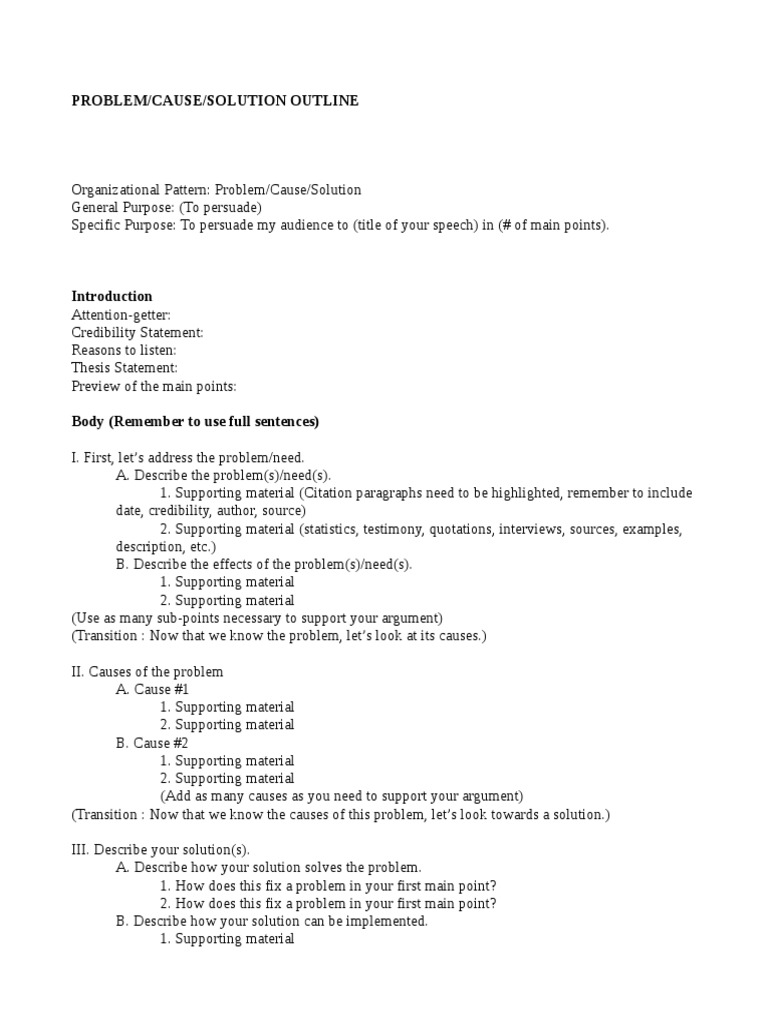
The Problem-Cause-Solution (PCS) pattern is a three-part persuasive framework designed to address complex issues by identifying a specific problem, diagnosing its underlying root cause, and proposing a targeted solution. Unlike the simpler two-step "Problem-Solution" model, the PCS pattern is widely considered one of the most effective structures for professional proposals and academic essays because it ensures the proposed fix actually negates the source of the trouble rather than just masking symptoms.
In the realm of persuasive communication, jumping straight from a problem to a solution often feels like applying a bandage to a deep wound without cleaning it first. The Problem-Cause-Solution pattern introduces a critical diagnostic phase that bridges the gap between identifying a crisis and proposing a remedy. According to the UMGC Writing Center, this three-pronged framework is particularly useful when your audience may not agree on why a problem exists in the first place.
Research into persuasive speaking suggests that while no single structure is a "magic bullet," audience members perceive structured patterns like PCS as significantly more organized and credible. A study by Micciche, Pryor, and Butler (2000), cited by Saylor Academy, indicates that organization is a primary driver of speaker credibility. By dedicating a specific section to the "Cause," you demonstrate a depth of analysis that simple models lack.
This guide is designed for individuals who need to move beyond surface-level arguments. Whether you are a student preparing for an IELTS Task 2 essay, a business professional drafting a process improvement proposal, or a public speaker advocating for policy change, mastering the PCS pattern provides a rigorous logical foundation for your claims.
To implement this pattern effectively, you must understand the distinct role each section plays in building your argument. Each pillar serves as a logical stepping stone for the next.
The first phase involves identifying the issue with precision. A common mistake is being too vague. Instead of saying "employee morale is low," a strong PCS opening identifies the stakeholders affected, the immediate risks of inaction, and the specific metrics that indicate a problem. You are essentially defining the "Gap" between where things are and where they should be.
This is the heart of the PCS pattern. Here, you analyze the origin of the issue. It is vital to distinguish between symptoms (the visible signs of trouble) and root causes (the systemic reasons the trouble exists). For example, if a company is losing money, the "loss of revenue" is a symptom; the "outdated software that slows down sales" is a potential cause. Addressing the cause is what makes your eventual solution viable.
The final phase proposes a specific, actionable plan. The key to a successful PCS solution is alignment. Your solution must directly address the cause you identified in Pillar 2. If you identified "lack of training" as the cause, your solution should be a "mentorship program," not a "salary increase." This logical tightrope is what makes the PCS pattern exceptionally strong in professional settings.
Choosing the right framework depends on the complexity of the issue and the mindset of your audience. The following table compares the PCS pattern with other popular persuasive models.
| Pattern | Structure | Best Use Case |
|---|---|---|
| Problem-Solution | 2-Step | Simple, self-evident issues where the cause is obvious. |
| Problem-Cause-Solution | 3-Step | Complex issues where the cause is debated or systemic. |
| Monroe’s Motivated Sequence | 5-Step | Public speaking aimed at immediate, emotional calls to action. |
While Monroe’s Motivated Sequence is a popular choice for motivational rallies, the PCS pattern stands out as a top choice for internal business reports and academic policy essays where logical scrutiny is high. As noted by Towson University, the PCS pattern is particularly effective when the audience is already aware of the problem but needs to be convinced of a specific diagnosis before they will accept your cure.
Identifying the "Cause" section of your essay or speech shouldn't be based on guesswork. Professionals use specific methodologies to ensure they are targeting the right issue. According to the American Society for Quality (ASQ), failing to identify the root cause leads to "temporary relief" rather than a permanent fix.
This method involves asking "Why?" five times to drill down from a surface symptom to a systemic cause. For example:
A Fishbone diagram is a visual tool used to categorize potential causes of a problem. It typically breaks causes down into four to six categories, such as:
Before you can analyze a cause, you must define the problem with academic rigor. The Harvard Graduate School of Education (GSE) recommends a framework often referred to as the "Gap Model" to focus your problem statement. This approach ensures your argument is grounded in reality rather than generalities.
To see how these pillars fit together, let's look at three distinct scenarios: academic, professional, and marketing.
In an academic setting, such as an IELTS Task 2 essay, the PCS pattern provides a clear roadmap for the reader.
In a professional environment, the "Cause" is often the most scrutinized section by leadership. They want to know you aren't just throwing money at a symptom.
Modern software companies often use a subtle version of the PCS pattern to sell their products without sounding overly aggressive.
Transitions act as the glue that holds the PCS pattern together. Without them, your argument can feel like three disconnected lists. Use these phrases to guide your audience through the logic.
The "Revolving Door" problem occurs when a solution is implemented, the problem disappears for a few months, and then it returns. This is almost always a sign that the "Cause" phase was rushed or misidentified. In community forums and professional circles, this is a frequent point of frustration.
"If you only treat the symptoms, the disease remains. A solution that doesn't account for the 'Why' is merely a delay of the inevitable."
To avoid this, ensure your solution has a direct logical link to the cause. If your cause is "lack of funding," your solution must involve "budget reallocation." If your cause is "poor communication," your solution must involve "new communication protocols." A mismatch here is a significant step backward and will likely lead to your proposal being rejected by savvy stakeholders.
Start your next proposal by mapping out these three pillars on a single page to ensure your logic is airtight before you begin writing the full draft.
The primary difference lies in the diagnostic depth. A standard Problem-Solution pattern is a two-step process that works well for simple issues where the cause is obvious to everyone. The Problem-Cause-Solution pattern adds a third step—the "Cause"—which is essential for complex or controversial issues where the audience needs to understand why a problem is happening before they will accept a specific solution.
In a standard five-paragraph essay, the "Cause" typically occupies the second body paragraph. The first body paragraph defines the problem, the second analyzes the cause, and the third proposes the solution. This structure ensures that each pillar receives equal weight and logical development, which is a standard requirement for exams like the IELTS Task 2.
Yes, you can identify multiple causes, but they should be grouped logically to avoid confusing the reader. If you have multiple causes, your solution must address all of them, or you must explain why you are prioritizing one cause over the others. In professional reports, it is often better to focus on the "primary" root cause to keep the solution focused and actionable.
The PCS pattern is exceptionally strong for both. In writing, it provides a clear, navigable structure for the reader. In speaking, it helps build logical buy-in from the audience. Because listeners cannot "re-read" a speech, the clear three-part structure of the PCS pattern makes it easier for them to follow your argument and remember your conclusion.
If the root cause is not immediately apparent, you should use professional diagnostic tools like the Fishbone Diagram or the "5 Whys." Additionally, consulting with stakeholders who are closest to the problem can provide "on-the-ground" insights that data alone might miss. Proposing a solution without a clear cause is risky and often leads to ineffective results.
